What one batch shoot day produces
How a planned short-form shoot day in Malaysia is structured, from script and shot list to shared setups, and what one day yields: a master and its cuts.
A planned shoot day produces a master film and a set of shorter vertical cuts from one pool of footage. How many depends on the script, the number of presenters and how many cuts can share each setup, so be careful with any quote that promises a fixed number per day.
This guide shows how we structure a short-form shoot day and what came out of the dealer rounds we filmed for Toyota in Samarahan and Kuching. It is for marketing managers deciding whether to buy videos one at a time or book a day and plan a month around it.
The day is decided on paper first
We write the script and shot list before the camera comes out. Every cut you want gets a line: who is on camera, what they say, where they stand, which product is in frame, and which platform it is for.
That list does most of the work. Once every cut is written down, you can see which ones happen in the same corner of the room, which ones need the same presenter, and which ones need nobody on camera at all. The order of the day comes from that list.
A shoot without a list still produces footage. It rarely produces a set of cuts that sit well together on a feed, because nobody decided what the set was.
How a planned day runs
3 rules shape the day.
Setups are shared across cuts. Moving lights, the camera and the clip-on mics takes time. So we film every piece that belongs in one position before moving. A presenter by a car can record the welcome, the feature points and a short answer to a common question in the same setup, and each becomes its own cut.
One presenter per setup. When a presenter is in position, mic on and lines ready, they finish all their pieces there. Swapping presenters mid-setup means checking sound and light again for a new face, and that is where a day loses its time.
B-roll in the gaps. While a presenter reads the next lines or changes, the camera keeps working on the shots that make cuts easier to edit: a door opening, a dashboard, a badge, hands on the wheel, people walking through the room. That footage goes under the voice in every cut, so it is filmed once and used many times.
A rough order for a showroom day looks like this:
- Exterior and entrance, with the presenter’s welcome lines.
- Product setups, one model at a time, each with its feature lines and a close-up pass.
- A seated or standing setup for questions and answers.
- B-roll and detail shots in every gap between the other setups.
The same person who shoots the day edits it, so the shot list and the edit plan are one document.
One master and its variants
Most planned days end with 2 kinds of output. The master is the full edit with every point in it. The variants are cut from the same footage for a different job.
Zenweb’s guide to video marketing agencies in Malaysia describes a strong scope as one master plus 8 to 12 variants across aspect ratios, with subtitles baked in. Its reasoning is about ads: they need several hooks, lengths and aspect ratios to test against each other. That range is Zenweb’s, not a count of ours. We think the method is sound.
A variant can be any of these:
- A shorter length, for a feed where people drop off before the minute mark.
- A different opening line, so you can test which hook holds attention.
- Another aspect ratio, for a placement that is not 9:16.
- Burned-in subtitles, for viewers watching with the sound off.
- A cutdown in Bahasa Malaysia, English or Mandarin from the same shoot day.
The last one changes the plan. If you want 3 languages, the presenter needs lines in each language on the shot list, and the setups have to allow time for each. We cover that in BM, English and Mandarin from one shoot day.
What the Toyota dealer rounds produced
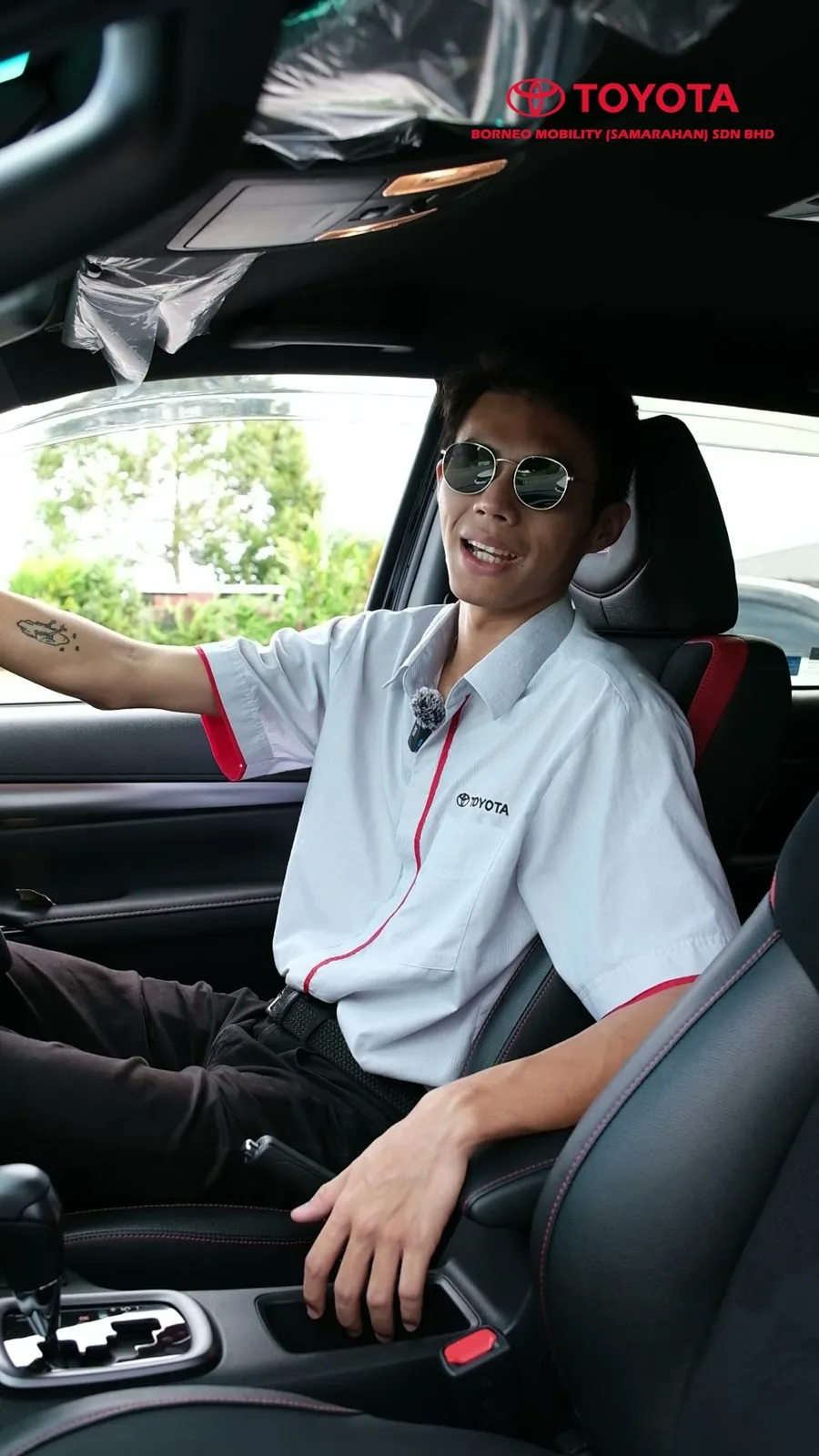
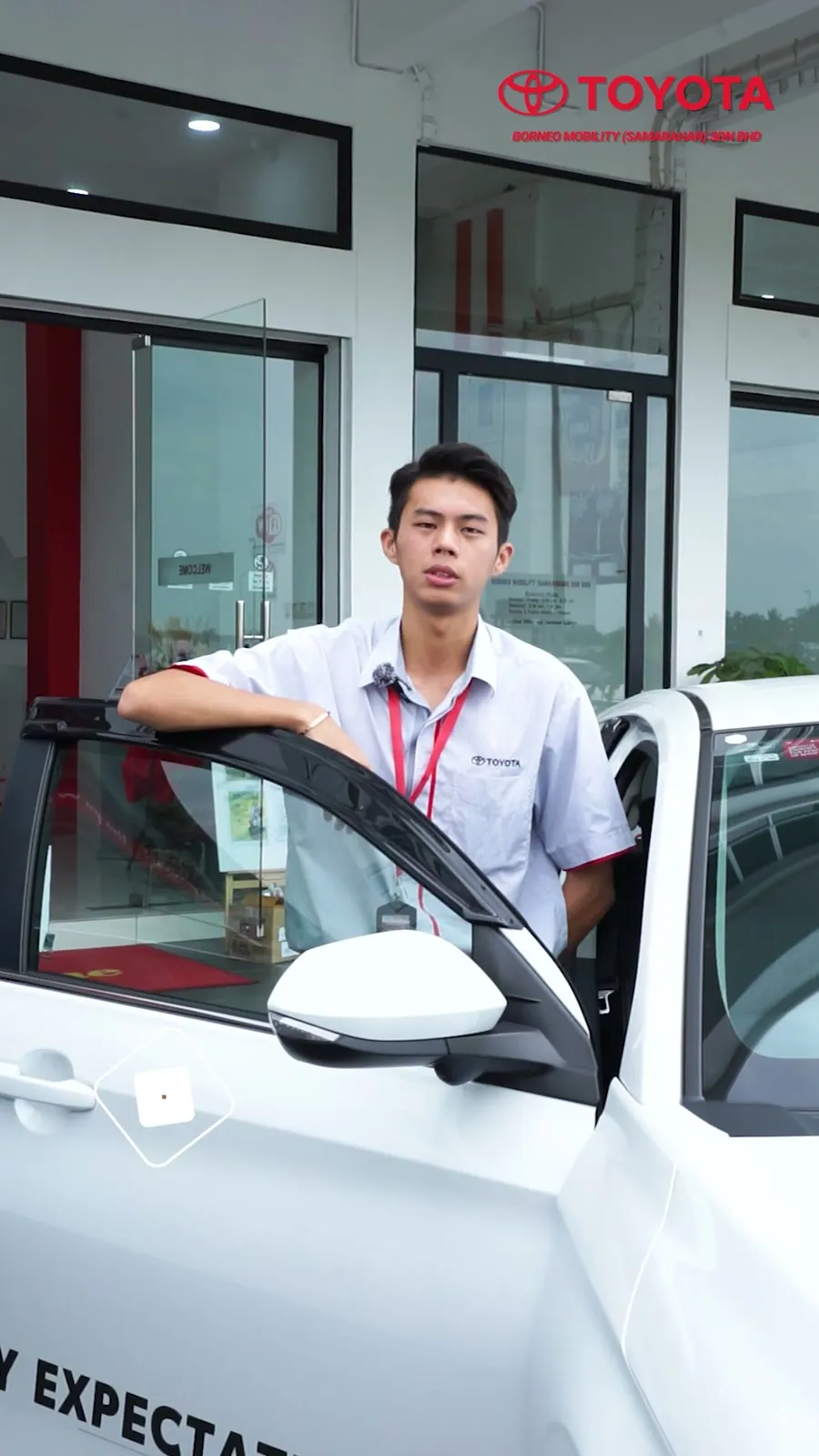
We filmed dealer social content for Toyota Borneo Mobility at its Samarahan and Kuching showrooms in rounds. Each round produced 2 vertical clips. Across the rounds, the content covered sales advisors presenting the showroom, model walk-throughs of the Corolla Cross, Yaris, Hilux, Hiace and Veloz, a showroom event with customer visits, and a tour of the workshop and team.
The feature films for the Corolla Cross Hybrid and the Hiace were not separate shoots. They were cut from the same showroom footage as the vertical clips. Plan the b-roll and detail shots well, and one day’s footage can feed more than one format.
What changes the count
No two days produce the same number. In our experience the count moves with 5 things:
- Presenters. A presenter who delivers lines in a few takes carries more cuts than one who needs many. Neither is wrong, but it changes the day.
- Languages. Each language version needs its own takes.
- Moves. Every change of location, or a car that has to be repositioned, costs setup time.
- Approvals. Lines about price, specs or offers need someone on site who can say yes.
- The list itself. A short list gets done well. An overloaded list gets rushed in the last hours.
That is why we would rather quote from your list of cuts than promise a number per day. If you are still working out how many cuts you need, start with how many videos a month a brand needs. For which of them need a crew at all, see phone-filmed or crew-filmed Reels.
Before you book a day
Bring 3 things to the first call: the list of cuts you want, who will present, and which products will be on site. With those, we can write the shot list, show which setups the cuts share, and tell you what the day can carry. The rest of the series is in the short-form video guides.
If you have a date in mind, send us the date and a line on the job. We reply with a quote within 1 working day.
Questions people ask
How many videos can a crew shoot in one day?
It depends on the script, the number of presenters and how many cuts share each setup. Zenweb's guide to video marketing agencies in Malaysia puts a strong scope at one master plus 8 to 12 variants from a single shoot day. Our Toyota dealer rounds each produced 2 vertical clips, and feature films were cut from the same showroom footage.
What is a batch shoot day?
A batch shoot day films several pieces of content in one planned session instead of booking a crew for each video. The script and shot list are written first, setups are shared across cuts, each presenter finishes their pieces in one setup, and b-roll is filmed in the gaps between them.
What is the difference between a master video and a variant?
The master is the full edit, the version with every point in it. A variant is cut from the same footage for a different job: a shorter length, a different opening line, another aspect ratio, subtitles burned in, or a version in Bahasa Malaysia, English or Mandarin. Variants need editing time, not another shoot day.
How many videos do I need before running ads?
Zenweb's answer is to plan for one master plus 8 to 12 variants from a single shoot day, because ads need several hooks, lengths and aspect ratios to test against each other. We agree with the logic. Put the ad variants on the shot list so the footage for each opening line exists before the edit starts.
Do I need a script for a short-form shoot day?
Yes, for anything with a presenter or a product. We write the script and shot list before the camera comes out, because the list decides which setups can be shared and how many cuts the day can carry. Candid and behind-the-scenes footage can be loose, but it still belongs on the list as b-roll.