How to get BM, English and Mandarin videos from one shoot day
One script, 3 language passes and one shot list: how a presenter video for Malaysia is written, filmed and cut in BM, English and Mandarin on the same day.

You can get BM, English and Mandarin versions of the same presenter video from one shoot day. Write one script, rewrite it into 3 language passes that share one shot list, and have the presenter record every language at each setup before the crew moves on.
Below is how we script, shoot and cut that 3-version piece, with 2 of our dealer films as the worked example. It is for marketing managers at Malaysian brands who sell to more than one language group and would rather pay for one shoot day than 3.
One script, 3 language passes
Start with a master script in the language your main audience prefers. Zenweb’s guide to multicultural marketing in Malaysia puts it plainly: BM usually wins with Malay consumers, Chinese copy lifts results with Chinese Malaysians, and English works for professionals. Pick the master by who buys most, then rewrite from there.
The master sets 2 things that every other version must keep: the beats and the shot list. Line 1 opens on the presenter at the car. Line 4 lands on the dashboard. Line 7 is the call to action at the door. Whatever language the presenter speaks, the camera is in the same place for each line.
The other 2 passes are rewrites, not translations. Zenweb makes the same point from the ad side: translation helps, but rebuilding the creative helps more. A native speaker should rewrite each pass so it sounds like someone talking across a counter. Prices, specs and model names stay identical across all 3.
Read each pass aloud with a timer before the day. Languages run to different lengths, and a line that fits a 4-second shot in English may need trimming in another language. Fix it in the script, not on set.
If your Chinese-speaking audience leans towards a dialect, decide that now. A Mandarin pass and a Cantonese pass are 2 different scripts.
Two ways to shoot it
There are 2 workable methods. Most jobs use one or the other, and some mix them.
| Every language on camera | One language on camera, subtitles for the rest | |
|---|---|---|
| Presenter | Fluent in all 3, or 2 presenters | Fluent in the main language |
| Takes per setup | 3, one per language | 1 |
| Time on the day | Presenter time roughly triples, setups stay the same | Close to a single-language shoot |
| What the viewer hears | Their own language | The main language, with their language on screen |
| Best for | Ads and pieces that must sound native | Fast social and mixed audiences |
Every language on camera. At each setup, the presenter records the English line, then BM, then Mandarin, before anyone touches a light. Moving the setup is the slow part of any shoot, so you only do it once. Have a native speaker on set or on a call for each language, listening for the take that sounds natural.
One language on camera. The presenter records the main language only, and the other versions carry subtitles. This is faster and cheaper on the day. It works when the audience can follow the spoken language, or when most people will watch on mute anyway. Lamanify’s short-form guide for Malaysia says over 65% of Malaysian mobile users watch social videos on mute while commuting or at work, which is why subtitles go on every version regardless.
We compare the 2 in more depth in subtitles or separate cuts.
What the presenter needs on the day
A presenter switching languages every few minutes tires faster than one who stays in one language. Give them the script in all 3 languages, printed large, one setup per page. Group the run of show so they finish all 3 languages at a setup, then rest while the crew moves.
Send the scripts at least a few days ahead so they can rehearse each pass out loud. A clip-on mic stays on the whole day, so the sound matches across every version. Our notes in how to prepare a founder for camera apply here too, especially if the presenter is someone from your own team.
How the 3 cuts come together in the edit
The editor builds one timeline for the master language first. Once the structure is approved, the other 2 versions are copies of that timeline with the presenter takes swapped in. The showroom footage, the product shots and the music stay the same.
Then each version gets its own pass for the details that change by language:
- On-screen text, captions and supers, rewritten in that language
- The call to action, including the phone number or link if it differs by audience
- Line timing, because a longer Mandarin or BM take moves everything after it
- A check by a native speaker before export
Each version is exported and named separately, so nobody posts the BM file to the Mandarin page. The full set lands on the date in your quote.
What this looked like for Proton and Haier
At Proton Supernau in Kuching, the X50 appears in 3 vertical pieces: a showroom walk-through of the X50 and X70, a cost-of-ownership talk, and a presenter piece in Mandarin. The Mandarin piece puts a presenter beside the car and carries a Mandarin caption burned into the frame, so it reads even with the sound off.
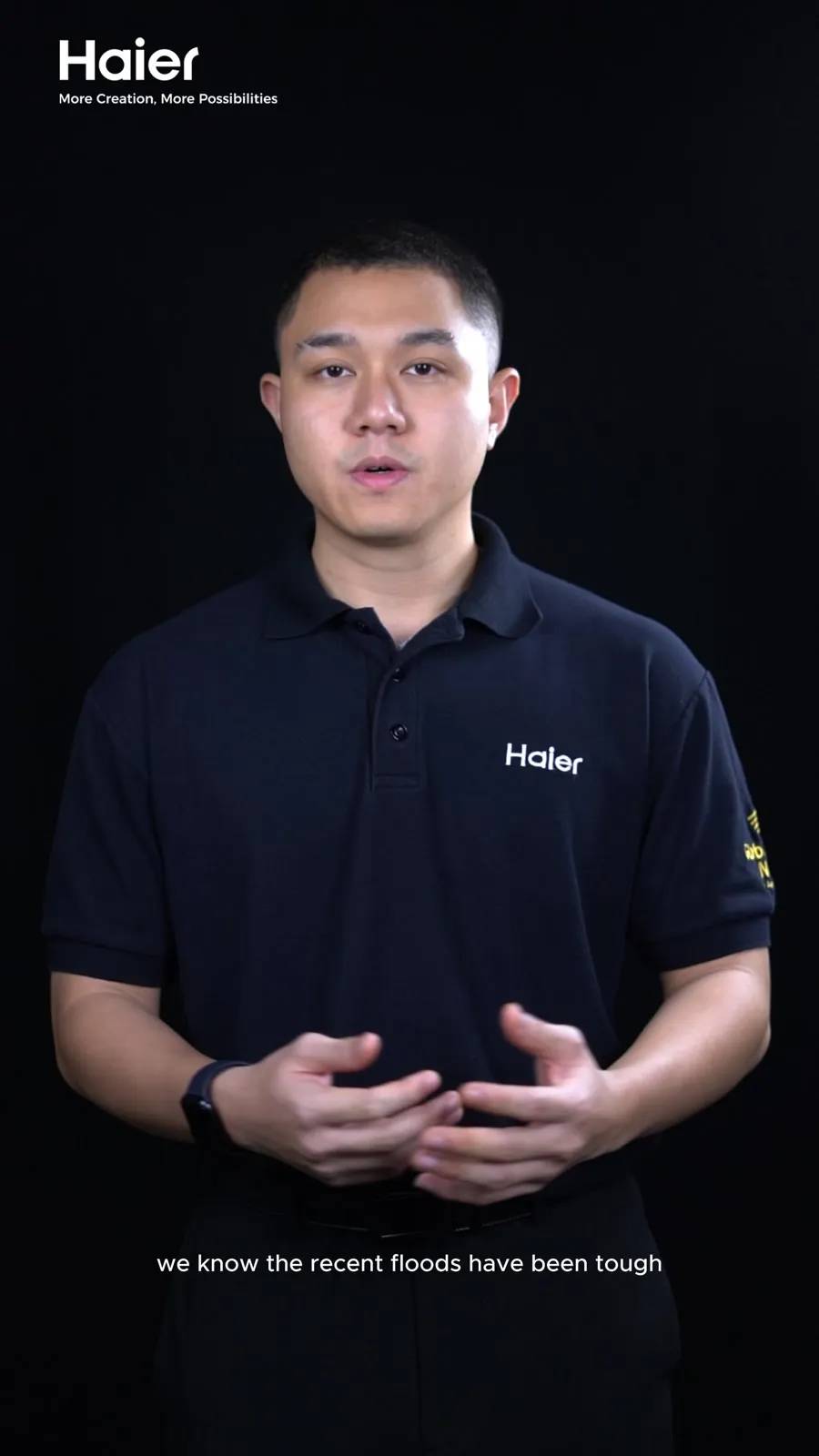
For Haier, the in-store laundry demo with a host at CL Khoon in Miri took the other route. It is one cut, with Chinese and English subtitles stacked on screen, so a single version serves 2 language groups.
Which of the 2 fits depends on who is watching and where the piece runs. More on that choice is in the multilingual video guides, including whether to post one video in 3 languages or 3 videos.
Before you book the day
Decide 3 things first: the master language, whether every language goes on camera, and who checks each version. Put all 3 in the brief. Then the shot list can be written before the camera comes out, and the quote can name each language version as its own deliverable with its own date.
If you have a product, a presenter and 3 audiences, send us the date and a line on the job. We reply with a quote within 1 working day.
Questions people ask
Can one shoot produce Malay, English and Mandarin videos?
Yes. Write one script, rewrite it into 3 language passes that share the same shot list, and have the presenter record every language at each setup before the crew moves on. The lights and framing stay put, so the extra cost is presenter time on the day and edit time afterwards, not 3 separate shoot days.
Does the presenter need to speak all 3 languages?
It helps, but it is not required. A presenter who is fluent in all 3 can record every version at each setup. If they are fluent in 1 or 2, record those on camera and carry the third language in subtitles. The other route is a second presenter for the language that must sound native.
Do I need a separate script for each language?
You need one script and 3 passes of it. The English or BM master sets the beats and the shot list. Each language pass is rewritten by a native speaker so it sounds like a person talking, and every line still lands on the same shot. A word-for-word translation usually reads stiff on camera.
How much longer does a 3-language shoot take?
Longer than one language, much shorter than 3 shoot days. Setting up lights, sound and framing happens once per setup. What multiplies is the presenter's takes, because each line is recorded 3 times. Plan the run of show around that, with breaks between language passes so the presenter stays fresh.
Which language should be the main version?
The one your biggest buying group prefers. Zenweb's guide to multicultural marketing in Malaysia says BM usually wins with Malay consumers, Chinese copy lifts results with Chinese Malaysians, and English works for professionals. Script the master in the language of your main audience, then rewrite from there.