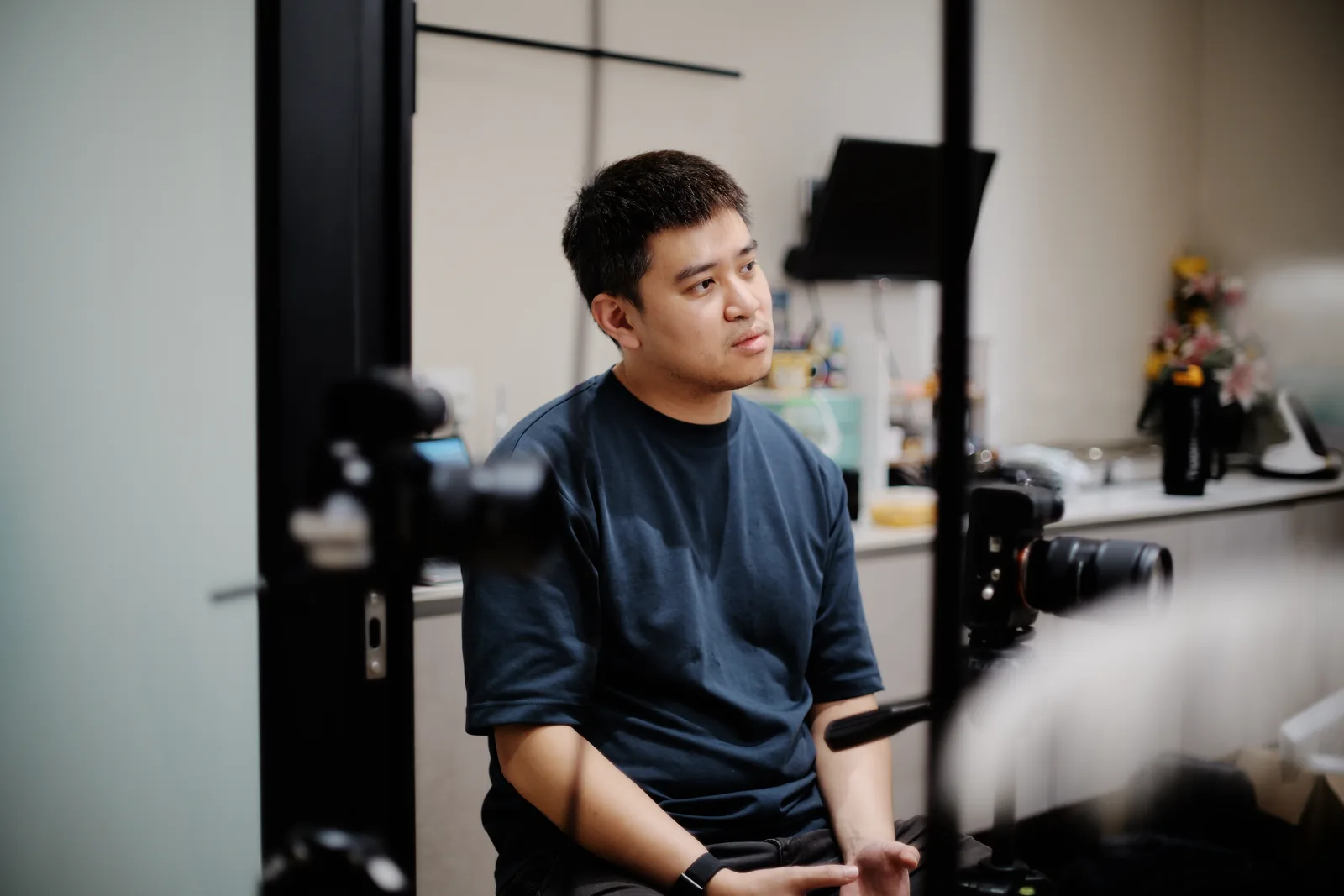
How to prepare a founder for camera without a script
A 3-day prep for founders and CEOs in Malaysia: topics sent ahead, 3 points that must land, 30 to 45 second answers, what to wear, the room and the warm-up.
Prepare the points, not the words. A founder who knows the 3 things that must land, has 1 example for each, and knows the interview is a conversation will sound like themselves on camera. A founder who has memorised a script will sound like they are reading, because in their head they are.
This is the prep we suggest in the 3 days before a founder, CEO or spokesperson sits for an interview. It is written for the marketing manager who has to get them there on time, in the right shirt, with something to say.
Why a script makes a founder sound rehearsed
Most founders talk well. They pitch to investors, close deals and train their staff. Put a page of lines in front of them and that ease goes. They start reading in their head while the camera rolls, and the viewer can see their eyes move.
Final Cut Multimedia, a US production company, puts it plainly in its shoot prep guide: memorised answers sound memorised. Its advice is to know 3 points and 1 example for each, and let the conversation carry the speaker there. That matches what we see on shoot days. The interviewer’s job is to ask in a way that reaches the points. The founder’s job is to know what the points are.
There is one exception. A short message straight to the lens, like a statement to customers or partners, is closer to a speech than an interview. That one can be written, kept short and rehearsed. Everything else runs better as a conversation.
Day 1, 3 to 5 days out: send topics and agree the 3 points
Send the topic areas a few days before the shoot. We suggest 3 to 5 days: enough time to think of examples, not enough to start rehearsing lines. Send areas, not questions. “We’ll talk about why you started, what the first year was like, and what customers ask you most” is enough.
Then agree the 3 points that must land, each written as one sentence. Final Cut’s checklist sets the same limit: 3 points per speaker, decided before shoot day. If the founder wants a fourth, ask which of the first 3 it replaces.
Next to each point, write down 1 example: a customer, a number the founder already uses in public, a day something went wrong. Examples are what make an answer usable on screen. Adjectives aren’t.
Day 2, the day before: clothes, room and calendar
What to wear. Solid colours in the middle of the range: navy, charcoal, mid blue, burgundy, forest green. Final Cut’s guide warns against pure white and pure black, and against fine stripes and small checks, which shimmer on video and cannot be fixed in the edit. PR News adds no black on black or white on white, no jewellery that makes noise near a clip-on mic, and glare-proof lenses for anyone who wears glasses. Bring a second top so the look can change between 2 videos from the same shoot.
The room. Quiet beats pretty. Pick a room away from the pantry and the lift lobby, and ask whether the air-con can be switched off during takes. Clear the desk and the whiteboard behind the speaker. Tell the crew where the windows are. Final Cut notes that a 2-camera interview with lights needs about 12 feet of depth, a little under 4 metres. A meeting room usually works. A small office usually doesn’t.
The calendar. Block more time than the interview needs. Final Cut plans 30 to 45 minutes per speaker including the mic and settling in, for 10 to 15 minutes of usable conversation. Put nothing important straight after it.
Day 3, shoot day: the first 10 minutes
Nobody is good on the first question, so the first questions don’t count. Final Cut opens with easy ones (name, role, what a normal week looks like) to get the speaker talking in full sentences and give the crew time to check audio and framing. That is the warm-up. It is also when a nervous founder notices that nothing bad is happening.
3 habits to set in those 10 minutes:
- Talk to the interviewer, not the lens. The interviewer sits beside the camera, and a person talking to a person looks natural on screen.
- Answer in full sentences. The interviewer’s voice is cut out, so “Yes, about 6 years” means nothing alone. “We started the company 6 years ago” stands on its own.
- Stop and restart freely. Lose the thread, take a breath, start the sentence again. That is what the edit is for.
Ask the founder to arrive early. Final Cut’s rule is 15 minutes before the slot, mic on and settled, with water at room temperature rather than iced.
How long each answer should run, and why re-asking is normal
Aim for 30 to 45 seconds per answer. PR News recommends training spokespeople to answer in 30 to 45 second increments rather than chasing a 12-second sound bite. That is long enough to make a point with an example, and short enough to cut into a social clip without losing the sense.
If an answer runs to 2 minutes, nothing is wrong. The interviewer asks again, in a different way: “What’s the short version?” or “Say that as if you were telling a customer.” The second answer is usually tighter, because the founder has already found the words once.
Tell the founder before the shoot that this will happen, and that it isn’t a sign they did badly. What the edit needs is 1 clean version of each point, not a perfect take from start to finish. If the founder speaks to customers in more than one language, plan the same 3 points in each. We cover that in BM, English and Mandarin from one shoot day.
What this looked like for a message on black
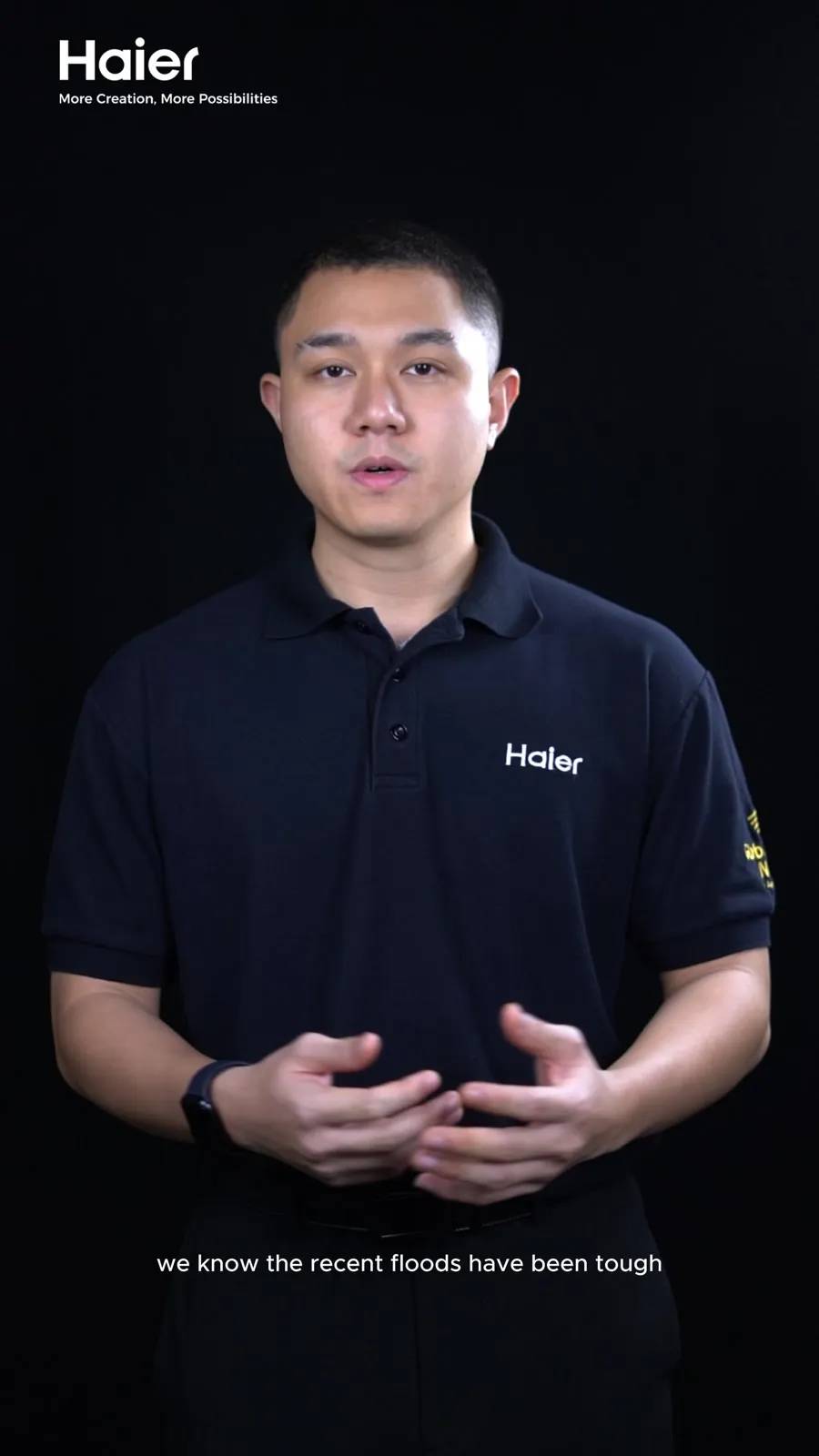
Our flood-relief message for Haier is the exception case from above: one spokesperson speaking straight to the lens, on a plain black background. He wears a plain dark polo and stands with his hands together. There is nothing else in the frame to look at. English subtitles carry the words for anyone watching with the sound off, and the edit cuts away to flood footage and a list of retailers in Miri. The whole message runs 1 minute 12 seconds.
That format works because the message is short and the reason for it is clear. Most founder interviews aren’t like that. They are closer to the personal brand interview pieces we cut for founders and doctors, where the person on camera talks to their own audience about their own work. For those, the 3 points and the warm-up do the job a script can’t.
Before the shoot
Send the topics, agree the 3 points, choose the shirt, book a quiet room and block the calendar. Then let the interviewer do the rest. For the questions themselves, see testimonial interview questions that get usable answers. For what to cut from the footage afterwards, see how long a testimonial video should be. The rest of our interview and testimonial guides cover the shoot from the customer’s side.
If you have a founder to film, send us the date and a line on the job. We reply with a quote within 1 working day.
Questions people ask
How do I prepare my CEO to speak naturally on camera?
Give them the topic areas a few days ahead, agree the 3 points that must land, and ask for 1 example for each. Then tell them it is a conversation with the interviewer beside the camera, not a speech to the lens. Book a quiet room, pick solid mid-tone clothes, and plan easy warm-up questions so the first answers that count come once they have settled.
Should a founder use a script for a video interview?
Not for an interview. Memorised answers sound memorised, and the viewer can see the speaker reading in their head. Know 3 points and 1 example for each, and let the interviewer's questions lead there. A short message straight to the lens, like a statement to customers, is the exception: that one can be written and kept short.
What should a founder wear on camera?
Solid colours in the middle of the range, such as navy, charcoal, mid blue or burgundy. Avoid pure white, pure black, fine stripes and small checks, which shimmer on video. Skip jewellery that jingles near a clip-on mic, wear glare-proof lenses if glasses are needed, and bring a second top so the crew can change the look between videos.
How long should each answer be in a founder interview?
Aim for 30 to 45 seconds. PR News recommends training spokespeople to answer in 30 to 45 second increments. That is long enough to make a point with an example and short enough to cut into a social clip. If an answer runs much longer, the interviewer asks again for the short version.
Should the founder see the questions before the shoot?
Send the topic areas, not the exact wording. A line like 'we will talk about why you started, the first year and what customers ask most' gives the founder time to find examples without rehearsing lines. Word-for-word questions turn into word-for-word answers, and those sound rehearsed on camera.
What if the founder hates being on camera?
Most people do until the second question. Start with easy warm-up questions that will never be used, keep the room small, and tell them they can stop and restart any sentence. Final Cut Multimedia notes that nervous speakers often give the best answers because they say what they mean.
Sources
- Final Cut Multimedia, How to prepare for a corporate video shoot (3 points not a script, wardrobe, room, timing, warm-up, restarting)
- Final Cut Multimedia, 25 customer testimonial video questions (send topic areas not questions, warm-up questions)
- PR News, Video interview? 6 tips to make your spokesperson shine (30 to 45 second answers, wardrobe, mock interviews)